|
The
Family Coat of Arms
About
the Coats
of Arms
A Family Coat of Arms, Crest or
Shield is a Heraldry symbol based on a Surname taken from the surcoat knights
used to protect themselves. Embodied on these surcoats were charges and armorial devices (very colorful crests, shields
and symbols), which the knights used to identify themselves. Since any one knight in armor would look similar to another,
this symbol was important in identifying a knight in battle. It made it easy to see who was a friend or foe with a quick glance.
The family members of these knights and noblemen were also known by and
associated with these same symbols.
There are numerous family surnames that have
such an associated symbol and there are hundreds of unique products available for
use by individuals, groups, reunions or those with a family gift list. If you
are interested, you can click on a link below to check if your family surname is
included in the list of those available.
Do
A Search
For Your Family Coat Of Arms Surname
or just
Scroll
Through A List Of Available Surnames
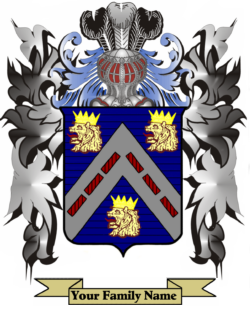
The Coat of Arms can have many parts but the main part is a shield. A charge is what is shown on the base color of the shield. The shield can have a crest above it, a motto, and supports (usually animals supporting the shield). Animals were frequently used as a main charge in coat of arms. Animals were shown in certain traditional postures, but they were not meant to be realistic pictures of the animals. They were drawn to depict the animal as a symbol. Usually the animals chosen were fierce, some are mythological animals, and they were often show in the positions of combat.
Some of the most common animals on shields of Coats of Arms were the Lion, Bear, Boar, Eagle, Horse, Dragon, Wolf, Unicorn, Hawk, Raven and Griffin. There were also names given for the positions in which the animals were shown. Some of the most common positions were Rampant (standing on hind legs), Rampant Guardant (standing on hind legs, facing the viewer), Passant (walking), Sejant (sitting) and Couchant (lying down). The "blazon" is a description of the shield in words, using a special vocabulary similar to a kind of old French. The terms used in
heraldry are those of the aristocracy during the Middle Ages and were primarily French.
Royalty were the first to have heraldic Coats of Arms. There is some controversy in the genealogy world about authenticity of
Coat of Arms because in olden times they were presented to individuals and passed down through the generations. So it is important to find historically correct
Coat of Arms. The Coat of Arms was passed down from family to family. The eldest son would often inherit his family’s coat of arms without any changes but the younger male siblings would often add symbols to further identify themselves. The symbol a younger son added was usually a smaller picture placed in the middle of the shield. When a woman married, the
Coat of Arms of her family was often added to her husband’s arms. Many times the
Coat of Arms were quartered, or divided into different parts. Many Coats of Arms have belonged to the same family, being handed down from father to son for generations.
Are you entitled to use Coat of Arms? There are organizations like the College of Arms that anyone may apply to. Provided you are "worthy persons" and have no criminal record, you will rarely be refused. However, they charge fees for their services. The Coats of Arms presented here are taken from the books of either “Burke’s General Armory”, “Rietstap’s Armorial General” or “El Solar Catalan Valenciano y balear”. They are the most accurate Coats of Arms for the family names represented that you can obtain without spending a great deal of what would probably be wasted resources to produce the same results.

Hitwebcounter.com Free
|